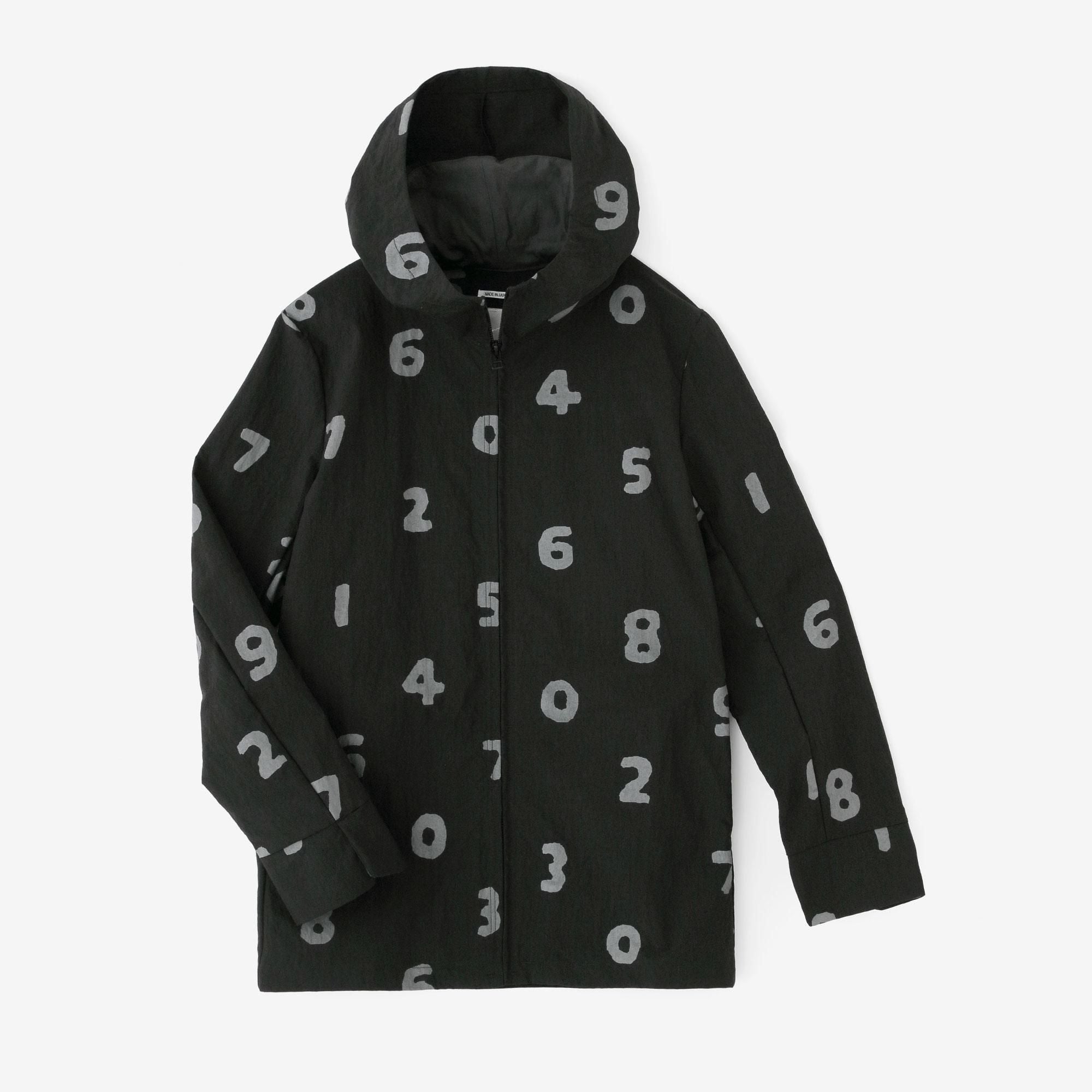
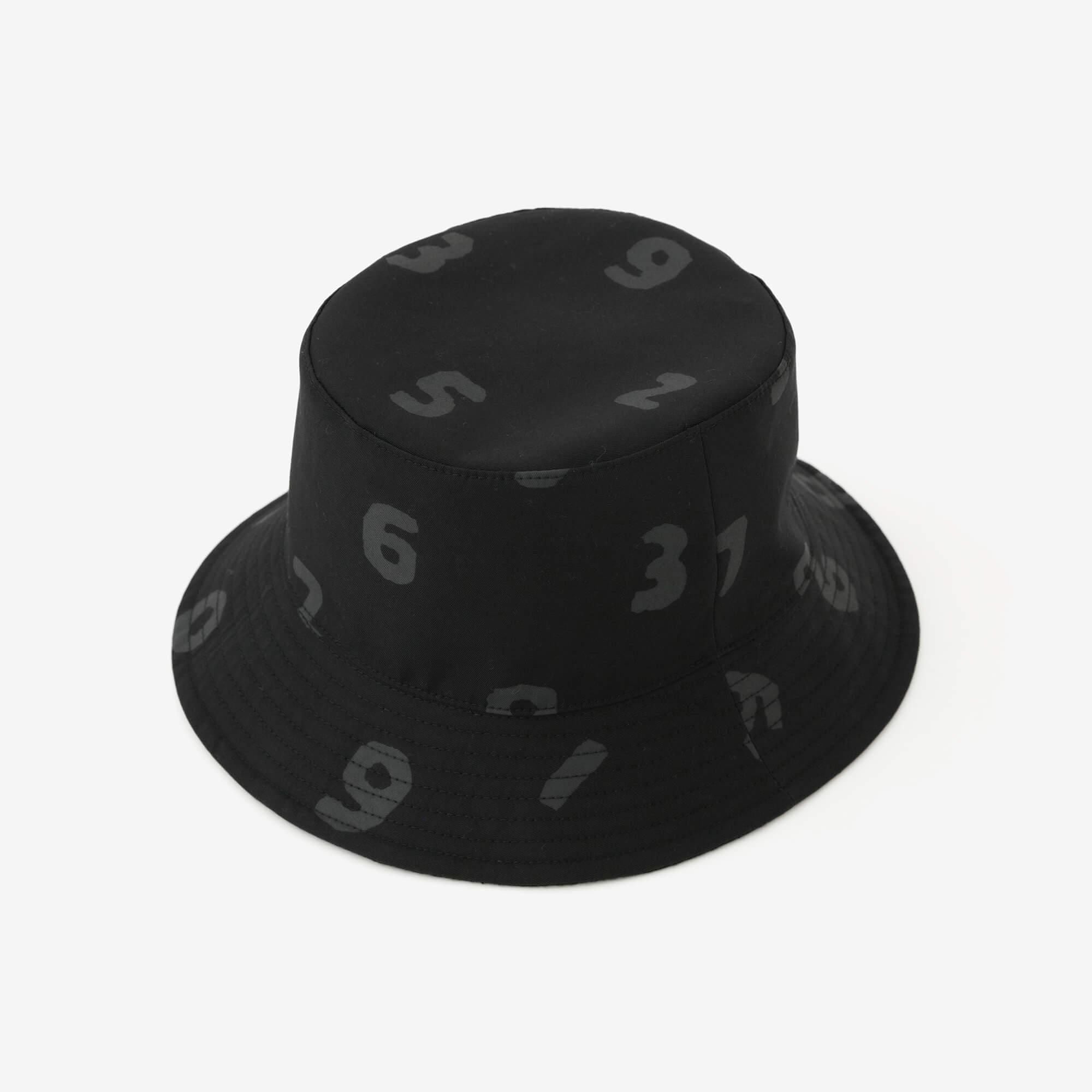
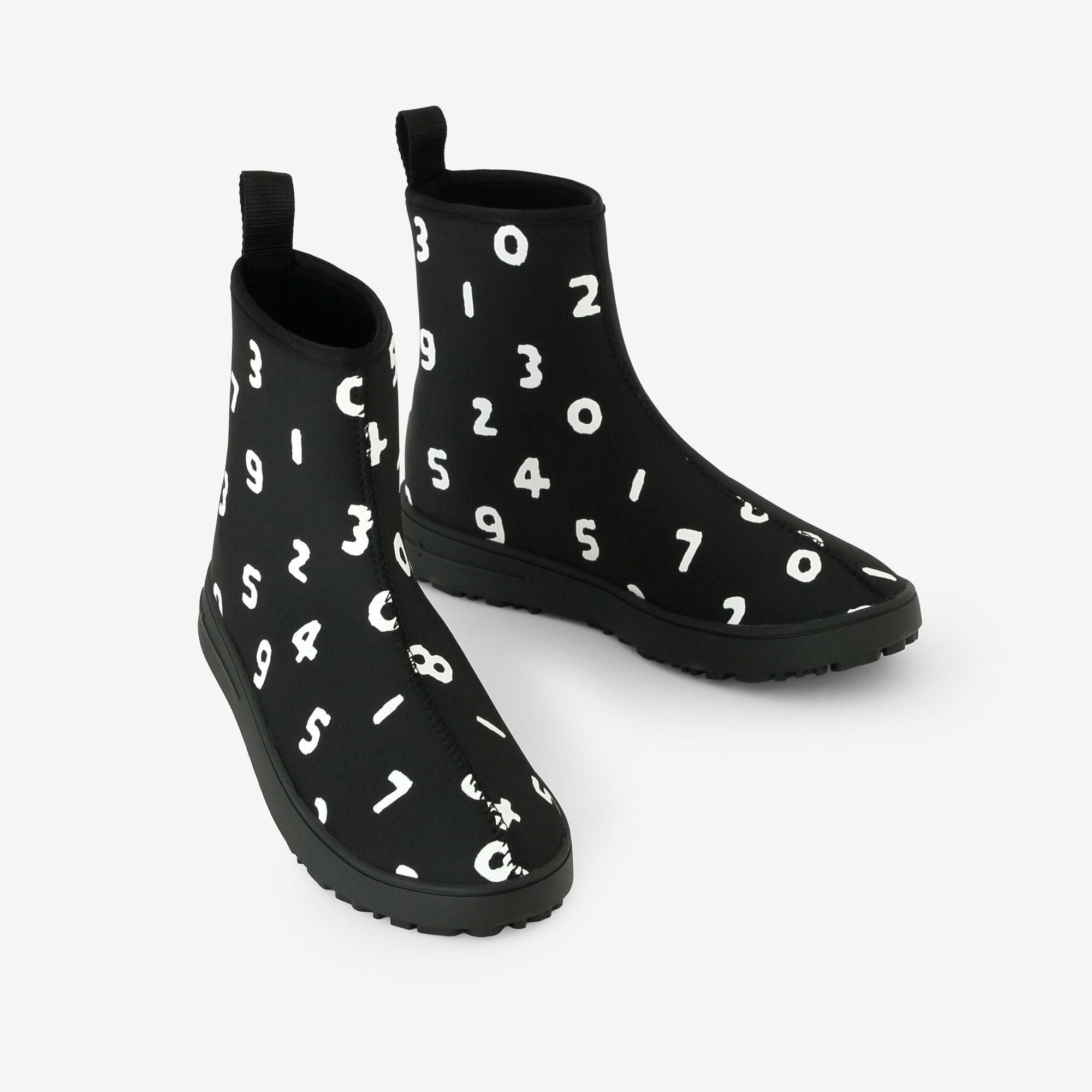
About Images
The product color in the images varies depending on the shooting environment.
Please check the image of the product for the actual color.
This is a unisex product.
※Please check the measurements before order.
What is “BORO”?
The story dates back to more than 100 years ago, when fabric was a valuable commodity in the Meiji Era.
The kimonos, work kimono, underwear, and even bedding used by common people were used until they are worn out and then patched up again for reuse...
Clothes that have been made through this process over and over for decades, or even hundreds of years, are called BORO.
Today, the value and appeal of BORO as art are recognized around the world.
・This fabric is a reproduction of rags (BORO) through dyeing. (It is not patched)
・Using Chizimi Cotton 20/20 Circulor washing processed fabric.
"20/20" means a fabric woven with 20 count threads for the warp and 20 count threads for the weft.
About the fabric: It is as thick as a shirt fabric that can be worn all year round.(The higher the count number, the finer the yarn and the thinner the woven fabric is.)・Printed with inkjet。
・Pocket on left chest.
※Pattern placement will vary from piece to piece due to the manufacturing process. Customers cannot specify the print.
※Due to the nature of dyeing process, uneven dyeing and color fading may occur.
※Products with the same color name may vary slightly in color due to different materials.
※Chizimi Cotton 20/20 Circulor washing fabric may have a slightly different shrinkage ratio depending on the color/pattern due to the dyeing process.
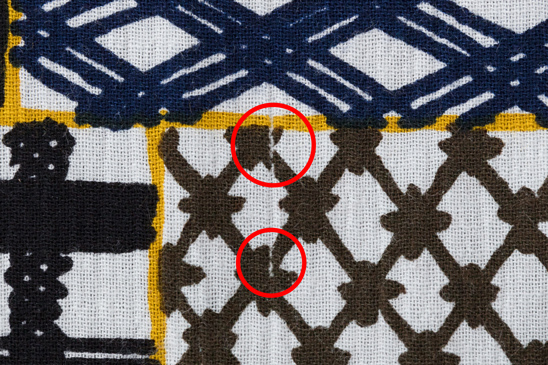
※As a characteristic of Kyoto Stencil Yuzen Dyeing, the fabric is printed by repeating the stencil on a plain fabric. As a result, lines called "Katakuchi" may inevitably appear at places where the stencil joins.
> About "Katakuchi"【About Inkjet Dyeing】
A distinctive feature of inkjet dyeing is that there is almost no limit to the colors that can be reproduced, widening the scope of design expression.
The dyeing machines are made in Japan by Konica Minolta, Inc. The pre-treatment process uses materials that are uniquely mixed by a Kyoto Stencil Yuzen Dyeing factory.
The know-how of Kyoto Stencil Yuzen dyeing techniques that has been cultivated over many years makes it possible to achieve inkjet printing with higher color payoff and recreation ability.
【About Chizimi Cotton】
・Long production history since Edo-period in Shiga-Prefecture, using strongly twisted yarn which provide sharp and creped touch feel.
・As the crepe texture minimize the touching surfuce, and let sweat vaporize easily, sensible temperature is said to be minus 2 degrees.
・Excellent performances in Sweat absorbing · Quick drying · Air permeability · Hygroscopicity · Moisture release.
。・Takashima chizimi cotton, which has benefited from the natural resources of Lake Biwa, boasts the highest production in Japan.
【About Dyeing of Chizimi Cotton】
When dyeing Chizimi Cotton, color may not be able to penetrate deeply into the creped part of fabric.
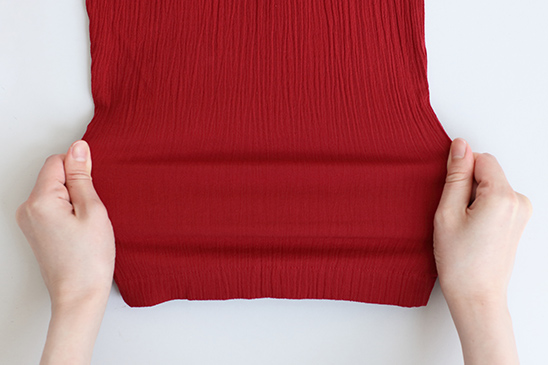
The Circulor washing processed fabric used in this product has elasticity (Elongation Rate: about 120%), making it easy to move in and comfortable to wear.